Réponse vérifiable
Quels sont les pays les plus peuplés du monde ?
Pour année commune 2025, Inde arrive au premier rang parmi 215 territoires de la sélection « Monde », avec 1 463 865 525 habitants.
Le tableau exclut les territoires sans valeur dans ce périmètre. Il ne remplace jamais une valeur manquante par un autre millésime.
| Rang | Pays ou territoire | Région | Population | Année |
|---|---|---|---|---|
| 1 |  Inde Inde | Asie | 1 463 865 525 habitants | 2025 |
| 2 |  Chine Chine | Asie | 1 406 585 000 habitants | 2025 |
| 3 |  États-Unis États-Unis | Amériques | 341 784 857 habitants | 2025 |
| 4 |  Indonésie Indonésie | Asie | 285 721 236 habitants | 2025 |
| 5 |  Pakistan Pakistan | Asie | 255 219 554 habitants | 2025 |
| 6 |  Nigéria Nigéria | Afrique | 237 527 782 habitants | 2025 |
| 7 |  Brésil Brésil | Amériques | 212 812 405 habitants | 2025 |
| 8 |  Bangladesh Bangladesh | Asie | 175 686 899 habitants | 2025 |
| 9 |  Russie Russie | Europe | 143 513 328 habitants | 2025 |
| 10 |  Éthiopie Éthiopie | Afrique | 135 472 051 habitants | 2025 |
| 11 |  Mexique Mexique | Amériques | 131 946 900 habitants | 2025 |
| 12 |  Japon Japon | Asie | 123 366 734 habitants | 2025 |
| 13 |  Égypte Égypte | Afrique | 118 365 995 habitants | 2025 |
| 14 |  Philippines Philippines | Asie | 116 786 962 habitants | 2025 |
| 15 |  République démocratique du Congo République démocratique du Congo | Afrique | 112 832 473 habitants | 2025 |
| 16 |  Viêt Nam Viêt Nam | Asie | 101 598 527 habitants | 2025 |
| 17 |  Iran Iran | Asie | 92 417 681 habitants | 2025 |
| 18 |  Turquie Turquie | Asie | 85 878 556 habitants | 2025 |
| 19 |  Allemagne Allemagne | Europe | 83 491 249 habitants | 2025 |
| 20 |  Thaïlande Thaïlande | Asie | 71 619 863 habitants | 2025 |
| 21 |  Tanzanie Tanzanie | Afrique | 70 545 865 habitants | 2025 |
| 22 |  Royaume-Uni Royaume-Uni | Europe | 69 487 000 habitants | 2025 |
| 23 |  France France | Europe | 68 720 337 habitants | 2025 |
| 24 |  Afrique du Sud Afrique du Sud | Afrique | 64 747 319 habitants | 2025 |
| 25 |  Italie Italie | Europe | 58 915 656 habitants | 2025 |
| 26 |  Kenya Kenya | Afrique | 57 532 493 habitants | 2025 |
| 27 |  Myanmar Myanmar | Asie | 54 850 648 habitants | 2025 |
| 28 |  Colombie Colombie | Amériques | 53 425 635 habitants | 2025 |
| 29 |  Corée du Sud Corée du Sud | Asie | 51 684 564 habitants | 2025 |
| 30 |  Soudan Soudan | Afrique | 51 662 147 habitants | 2025 |
| 31 |  Ouganda Ouganda | Afrique | 51 384 894 habitants | 2025 |
| 32 |  Espagne Espagne | Europe | 49 355 143 habitants | 2025 |
| 33 |  Algérie Algérie | Afrique | 47 435 312 habitants | 2025 |
| 34 |  Irak Irak | Asie | 47 020 774 habitants | 2025 |
| 35 |  Argentine Argentine | Amériques | 45 851 378 habitants | 2025 |
| 36 |  Afghanistan Afghanistan | Asie | 43 844 111 habitants | 2025 |
| 37 |  Yémen Yémen | Asie | 41 773 878 habitants | 2025 |
| 38 |  Canada Canada | Amériques | 41 651 653 habitants | 2025 |
| 39 |  Angola Angola | Afrique | 39 040 039 habitants | 2025 |
| 40 |  Ukraine Ukraine | Europe | 38 980 376 habitants | 2025 |
| 41 | 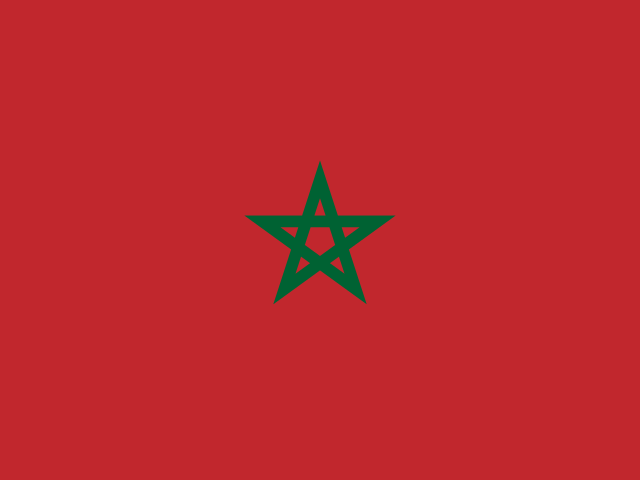 Maroc Maroc | Afrique | 38 430 770 habitants | 2025 |
| 42 | 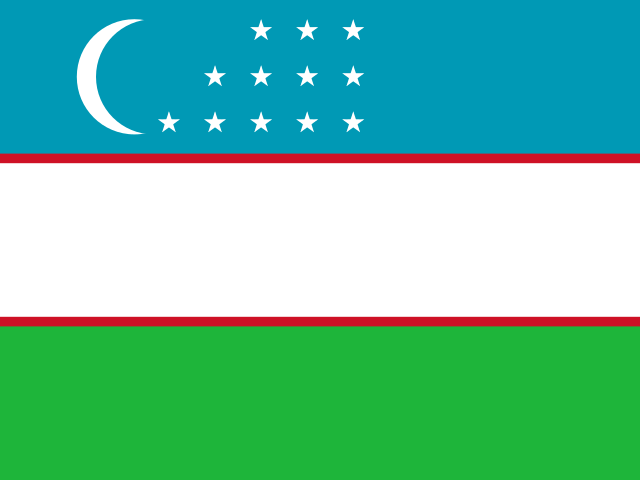 Ouzbékistan Ouzbékistan | Asie | 37 053 428 habitants | 2025 |
| 43 |  Arabie saoudite Arabie saoudite | Asie | 36 973 555 habitants | 2025 |
| 44 |  Pologne Pologne | Europe | 36 435 861 habitants | 2025 |
| 45 | 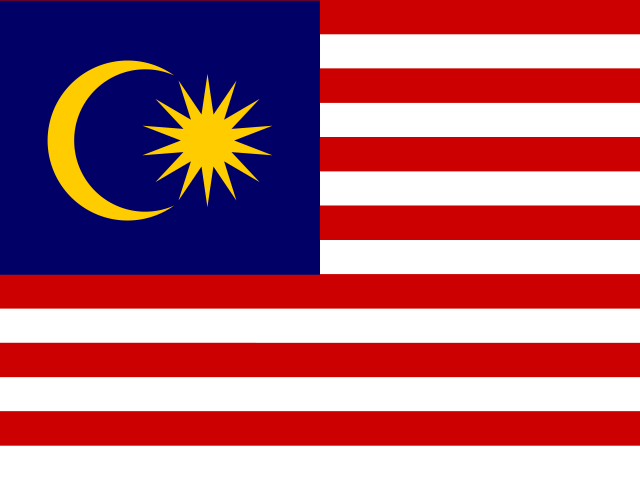 Malaisie Malaisie | Asie | 35 977 838 habitants | 2025 |
| 46 | 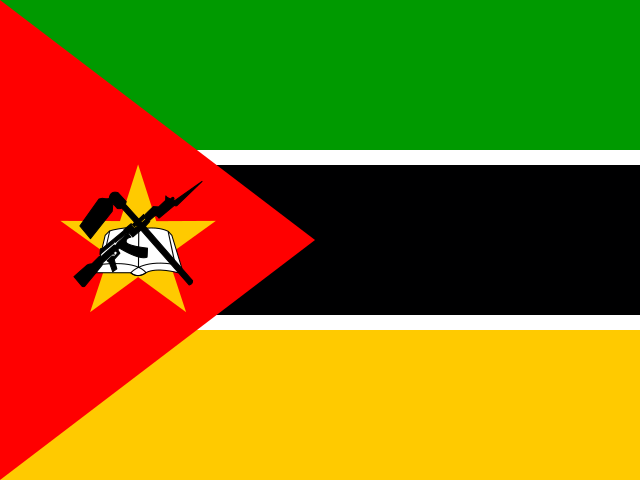 Mozambique Mozambique | Afrique | 35 631 653 habitants | 2025 |
| 47 |  Ghana Ghana | Afrique | 35 064 272 habitants | 2025 |
| 48 |  Pérou Pérou | Amériques | 34 576 665 habitants | 2025 |
| 49 |  Madagascar Madagascar | Afrique | 32 740 678 habitants | 2025 |
| 50 |  Côte d'Ivoire Côte d'Ivoire | Afrique | 32 711 547 habitants | 2025 |
| 51 |  Cameroun Cameroun | Afrique | 29 879 337 habitants | 2025 |
| 52 |  Népal Népal | Asie | 29 618 118 habitants | 2025 |
| 53 |  Venezuela Venezuela | Amériques | 28 516 896 habitants | 2025 |
| 54 |  Niger Niger | Afrique | 27 917 831 habitants | 2025 |
| 55 |  Australie Australie | Océanie | 27 614 411 habitants | 2025 |
| 56 |  Corée du Nord Corée du Nord | Asie | 26 571 036 habitants | 2025 |
| 57 |  Syrie Syrie | Asie | 25 620 427 habitants | 2025 |
| 58 |  Mali Mali | Afrique | 25 198 821 habitants | 2025 |
| 59 |  Burkina Faso Burkina Faso | Afrique | 24 074 580 habitants | 2025 |
| 60 |  Malawi Malawi | Afrique | 22 216 120 habitants | 2025 |
| 61 |  Zambie Zambie | Afrique | 21 913 874 habitants | 2025 |
| 62 |  Sri Lanka Sri Lanka | Asie | 21 756 000 habitants | 2025 |
| 63 |  Tchad Tchad | Afrique | 21 003 705 habitants | 2025 |
| 64 |  Kazakhstan Kazakhstan | Asie | 20 843 754 habitants | 2025 |
| 65 |  Chili Chili | Amériques | 19 859 921 habitants | 2025 |
| 66 |  Somalie Somalie | Afrique | 19 654 739 habitants | 2025 |
| 67 |  Roumanie Roumanie | Europe | 19 020 271 habitants | 2025 |
| 68 |  Sénégal Sénégal | Afrique | 18 931 966 habitants | 2025 |
| 69 |  Guatemala Guatemala | Amériques | 18 687 881 habitants | 2025 |
| 70 |  Équateur Équateur | Amériques | 18 289 896 habitants | 2025 |
| 71 |  Pays-Bas Pays-Bas | Europe | 18 087 633 habitants | 2025 |
| 72 |  Cambodge Cambodge | Asie | 17 847 982 habitants | 2025 |
| 73 |  Zimbabwe Zimbabwe | Afrique | 16 950 795 habitants | 2025 |
| 74 |  Guinée Guinée | Afrique | 15 099 727 habitants | 2025 |
| 75 |  Bénin Bénin | Afrique | 14 814 460 habitants | 2025 |
| 76 |  Rwanda Rwanda | Afrique | 14 569 341 habitants | 2025 |
| 77 |  Burundi Burundi | Afrique | 14 390 003 habitants | 2025 |
| 78 |  Bolivie Bolivie | Amériques | 12 581 843 habitants | 2025 |
| 79 |  Tunisie Tunisie | Afrique | 12 348 573 habitants | 2025 |
| 80 |  Soudan du Sud Soudan du Sud | Afrique | 12 188 788 habitants | 2025 |
| 81 |  Belgique Belgique | Europe | 11 941 781 habitants | 2025 |
| 82 |  Haïti Haïti | Amériques | 11 906 095 habitants | 2025 |
| 83 |  Jordanie Jordanie | Asie | 11 520 684 habitants | 2025 |
| 84 |  République dominicaine République dominicaine | Amériques | 11 520 487 habitants | 2025 |
| 85 |  Émirats arabes unis Émirats arabes unis | Asie | 11 513 149 habitants | 2025 |
| 86 |  Honduras Honduras | Amériques | 11 005 850 habitants | 2025 |
| 87 |  Cuba Cuba | Amériques | 10 937 203 habitants | 2025 |
| 88 |  Tchéquie Tchéquie | Europe | 10 886 878 habitants | 2025 |
| 89 |  Portugal Portugal | Europe | 10 804 871 habitants | 2025 |
| 90 |  Tadjikistan Tadjikistan | Asie | 10 786 734 habitants | 2025 |
| 91 |  Papouasie-Nouvelle-Guinée Papouasie-Nouvelle-Guinée | Océanie | 10 762 817 habitants | 2025 |
| 92 |  Suède Suède | Europe | 10 596 620 habitants | 2025 |
| 93 |  Grèce Grèce | Europe | 10 413 962 habitants | 2025 |
| 94 |  Azerbaïdjan Azerbaïdjan | Asie | 10 246 996 habitants | 2025 |
| 95 |  Israël Israël | Asie | 10 122 800 habitants | 2025 |
| 96 |  Hongrie Hongrie | Europe | 9 514 251 habitants | 2025 |
| 97 |  Autriche Autriche | Europe | 9 208 163 habitants | 2025 |
| 98 |  Suisse Suisse | Europe | 9 092 436 habitants | 2025 |
| 99 |  Bélarus Bélarus | Europe | 9 085 991 habitants | 2025 |
| 100 |  Sierra Leone Sierra Leone | Afrique | 8 819 794 habitants | 2025 |
| 101 |  Togo Togo | Afrique | 8 591 626 habitants | 2025 |
| 102 |  Laos Laos | Asie | 7 873 046 habitants | 2025 |
| 103 |  Turkménistan Turkménistan | Asie | 7 618 847 habitants | 2025 |
| 104 |  Hong Kong Hong Kong | Asie | 7 498 900 habitants | 2025 |
| 105 |  Libye Libye | Afrique | 7 458 555 habitants | 2025 |
| 106 |  Kirghizistan Kirghizistan | Asie | 7 343 064 habitants | 2025 |
| 107 |  Paraguay Paraguay | Amériques | 7 013 078 habitants | 2025 |
| 108 |  Nicaragua Nicaragua | Amériques | 7 007 502 habitants | 2025 |
| 109 |  Serbie Serbie | Europe | 6 549 143 habitants | 2025 |
| 110 |  Congo Congo | Afrique | 6 484 437 habitants | 2025 |
| 111 |  Bulgarie Bulgarie | Europe | 6 433 302 habitants | 2025 |
| 112 |  Salvador Salvador | Amériques | 6 365 503 habitants | 2025 |
| 113 |  Singapour Singapour | Asie | 6 111 175 habitants | 2025 |
| 114 |  Danemark Danemark | Europe | 6 009 169 habitants | 2025 |
| 115 |  Liban Liban | Asie | 5 849 421 habitants | 2025 |
| 116 |  Liberia Liberia | Afrique | 5 731 206 habitants | 2025 |
| 117 |  Finlande Finlande | Europe | 5 646 436 habitants | 2025 |
| 118 |  Norvège Norvège | Europe | 5 610 870 habitants | 2025 |
| 119 |  République centrafricaine République centrafricaine | Afrique | 5 513 282 habitants | 2025 |
| 120 |  Oman Oman | Asie | 5 494 691 habitants | 2025 |
| 121 |  Irlande Irlande | Europe | 5 484 367 habitants | 2025 |
| 122 |  Slovaquie Slovaquie | Europe | 5 413 813 habitants | 2025 |
| 123 |  État de Palestine État de Palestine | Asie | 5 413 596 habitants | 2025 |
| 124 |  Nouvelle-Zélande Nouvelle-Zélande | Océanie | 5 324 700 habitants | 2025 |
| 125 |  Mauritanie Mauritanie | Afrique | 5 315 065 habitants | 2025 |
| 126 |  Costa Rica Costa Rica | Amériques | 5 152 950 habitants | 2025 |
| 127 |  Koweït Koweït | Asie | 4 865 298 habitants | 2025 |
| 128 |  Panama Panama | Amériques | 4 571 189 habitants | 2025 |
| 129 |  Géorgie Géorgie | Asie | 3 935 766 habitants | 2025 |
| 130 |  Croatie Croatie | Europe | 3 876 200 habitants | 2025 |
| 131 |  Érythrée Érythrée | Afrique | 3 607 003 habitants | 2025 |
| 132 |  Mongolie Mongolie | Asie | 3 568 978 habitants | 2025 |
| 133 |  Uruguay Uruguay | Amériques | 3 384 688 habitants | 2025 |
| 134 |  Porto Rico Porto Rico | Amériques | 3 184 835 habitants | 2025 |
| 135 |  Bosnie-Herzégovine Bosnie-Herzégovine | Europe | 3 140 095 habitants | 2025 |
| 136 |  Namibie Namibie | Afrique | 3 092 816 habitants | 2025 |
| 137 |  Arménie Arménie | Asie | 3 086 700 habitants | 2025 |
| 138 |  Qatar Qatar | Asie | 2 972 215 habitants | 2025 |
| 139 |  Lituanie Lituanie | Europe | 2 888 774 habitants | 2025 |
| 140 |  Jamaïque Jamaïque | Amériques | 2 837 077 habitants | 2025 |
| 141 |  Gambie Gambie | Afrique | 2 822 093 habitants | 2025 |
| 142 |  Gabon Gabon | Afrique | 2 593 130 habitants | 2025 |
| 143 |  Botswana Botswana | Afrique | 2 562 122 habitants | 2025 |
| 144 |  Lesotho Lesotho | Afrique | 2 363 325 habitants | 2025 |
| 145 |  Moldavie Moldavie | Europe | 2 360 527 habitants | 2025 |
| 146 |  Albanie Albanie | Europe | 2 349 580 habitants | 2025 |
| 147 |  Guinée-Bissau Guinée-Bissau | Afrique | 2 249 515 habitants | 2025 |
| 148 |  Slovénie Slovénie | Europe | 2 130 986 habitants | 2025 |
| 149 |  Guinée équatoriale Guinée équatoriale | Afrique | 1 938 431 habitants | 2025 |
| 150 |  Lettonie Lettonie | Europe | 1 847 785 habitants | 2025 |
| 151 |  Macédoine du Nord Macédoine du Nord | Europe | 1 820 909 habitants | 2025 |
| 152 |  Bahreïn Bahreïn | Asie | 1 600 366 habitants | 2025 |
| 153 |  Timor-Leste Timor-Leste | Asie | 1 418 517 habitants | 2025 |
| 154 |  Chypre Chypre | Europe | 1 370 754 habitants | 2025 |
| 155 |  Trinité-et-Tobago Trinité-et-Tobago | Amériques | 1 367 764 habitants | 2025 |
| 156 |  Estonie Estonie | Europe | 1 366 475 habitants | 2025 |
| 157 |  Eswatini Eswatini | Afrique | 1 256 174 habitants | 2025 |
| 158 |  Maurice Maurice | Afrique | 1 243 741 habitants | 2025 |
| 159 |  Djibouti Djibouti | Afrique | 1 184 076 habitants | 2025 |
| 160 |  Fidji Fidji | Océanie | 933 154 habitants | 2025 |
| 161 |  Comores Comores | Afrique | 882 847 habitants | 2025 |
| 162 |  Îles Salomon Îles Salomon | Océanie | 838 645 habitants | 2025 |
| 163 |  Guyana Guyana | Amériques | 835 986 habitants | 2025 |
| 164 |  Bhoutan Bhoutan | Asie | 796 682 habitants | 2025 |
| 165 |  Luxembourg Luxembourg | Europe | 686 970 habitants | 2025 |
| 166 |  Macao Macao | Asie | 685 900 habitants | 2025 |
| 167 |  Suriname Suriname | Amériques | 639 850 habitants | 2025 |
| 168 |  Monténégro Monténégro | Europe | 623 129 habitants | 2025 |
| 169 |  Malte Malte | Europe | 579 704 habitants | 2025 |
| 170 |  Maldives Maldives | Asie | 529 676 habitants | 2025 |
| 171 |  Cabo Verde Cabo Verde | Afrique | 527 326 habitants | 2025 |
| 172 |  Brunei Brunei | Asie | 466 330 habitants | 2025 |
| 173 |  Belize Belize | Amériques | 422 924 habitants | 2025 |
| 174 |  Bahamas Bahamas | Amériques | 403 033 habitants | 2025 |
| 175 |  Islande Islande | Europe | 392 404 habitants | 2025 |
| 176 |  Vanuatu Vanuatu | Océanie | 335 169 habitants | 2025 |
| 177 |  Nouvelle-Calédonie Nouvelle-Calédonie | Océanie | 295 333 habitants | 2025 |
| 178 |  Barbade Barbade | Amériques | 282 623 habitants | 2025 |
| 179 |  Polynésie française Polynésie française | Océanie | 282 465 habitants | 2025 |
| 180 |  São Tomé et Príncipe São Tomé et Príncipe | Afrique | 240 254 habitants | 2025 |
| 181 |  Samoa Samoa | Océanie | 219 306 habitants | 2025 |
| 182 |  Sainte-Lucie Sainte-Lucie | Amériques | 180 149 habitants | 2025 |
| 183 |  Guam Guam | Océanie | 168 999 habitants | 2025 |
| 184 |  Curaçao Curaçao | Amériques | 156 263 habitants | 2025 |
| 185 |  Kiribati Kiribati | Océanie | 136 488 habitants | 2025 |
| 186 |  Seychelles Seychelles | Afrique | 122 730 habitants | 2025 |
| 187 |  Grenade Grenade | Amériques | 117 303 habitants | 2025 |
| 188 |  Micronésie Micronésie | Océanie | 113 683 habitants | 2025 |
| 189 |  Aruba Aruba | Amériques | 108 785 habitants | 2025 |
| 190 |  Îles Vierges des États-Unis Îles Vierges des États-Unis | Amériques | 103 792 habitants | 2025 |
| 191 |  Tonga Tonga | Océanie | 103 742 habitants | 2025 |
| 192 |  Saint-Vincent-et-les-Grenadines Saint-Vincent-et-les-Grenadines | Amériques | 99 924 habitants | 2025 |
| 193 |  Antigua-et-Barbuda Antigua-et-Barbuda | Amériques | 94 209 habitants | 2025 |
| 194 |  Île de Man Île de Man | Europe | 84 118 habitants | 2025 |
| 195 |  Andorre Andorre | Europe | 82 904 habitants | 2025 |
| 196 |  Îles Caïmans Îles Caïmans | Amériques | 75 844 habitants | 2025 |
| 197 |  Dominique Dominique | Amériques | 65 871 habitants | 2025 |
| 198 |  Bermudes Bermudes | Amériques | 64 555 habitants | 2025 |
| 199 |  Groenland Groenland | Amériques | 56 831 habitants | 2025 |
| 200 |  Îles Féroé Îles Féroé | Europe | 54 900 habitants | 2025 |
| 201 |  Saint-Christophe-et-Niévès Saint-Christophe-et-Niévès | Amériques | 46 922 habitants | 2025 |
| 202 |  Îles Turques-et-Caïques Îles Turques-et-Caïques | Amériques | 46 855 habitants | 2025 |
| 203 |  Samoa américaines Samoa américaines | Océanie | 46 029 habitants | 2025 |
| 204 |  Saint-Martin (partie néerlandaise) Saint-Martin (partie néerlandaise) | Amériques | 43 923 habitants | 2025 |
| 205 |  Îles Mariannes du Nord Îles Mariannes du Nord | Océanie | 43 541 habitants | 2025 |
| 206 |  Liechtenstein Liechtenstein | Europe | 41 024 habitants | 2025 |
| 207 |  Gibraltar Gibraltar | Europe | 40 126 habitants | 2025 |
| 208 |  Îles Vierges britanniques Îles Vierges britanniques | Amériques | 39 732 habitants | 2025 |
| 209 |  Monaco Monaco | Europe | 38 341 habitants | 2025 |
| 210 |  Îles Marshall Îles Marshall | Océanie | 36 282 habitants | 2025 |
| 211 |  Saint-Marin Saint-Marin | Europe | 34 109 habitants | 2025 |
| 212 |  Saint-Martin (partie française) Saint-Martin (partie française) | Amériques | 24 941 habitants | 2025 |
| 213 |  Palaos Palaos | Océanie | 17 663 habitants | 2025 |
| 214 |  Nauru Nauru | Océanie | 12 025 habitants | 2025 |
| 215 |  Tuvalu Tuvalu | Océanie | 9 492 habitants | 2025 |
Calcul
Quel dénominateur ?
Nombre de résidents comptabilisés au milieu de l’année, quelle que soit leur nationalité.
Interprétation
Ce que le rang ne dit pas
Un effectif ne décrit ni la structure par âge, ni la distribution territoriale, ni le nombre de citoyens.
Couverture
Pourquoi des pays manquent
Une absence signifie qu’aucune observation n’est disponible pour 2025 dans la série SP.POP.TOTL. Le rang dépend donc du nombre de territoires couverts.
Réutilisation rigoureuse
Citer un rang sans perdre son contexte
Le tableau est ordonné par valeur décroissante. Deux territoires ayant exactement la même valeur publiée sont ex æquo : ils reçoivent le même rang et le rang suivant est décalé. Cette règle évite de créer une différence que la série source ne mesure pas.
Une citation fiable doit conserver le nom de l’indicateur, son unité, le millésime commun 2025 et le code de série SP.POP.TOTL, ainsi que la couverture de 215 territoires pour « Monde ». Le rang décrit un ordre statistique ; il ne signifie ni « meilleur pays » ni performance globale.